

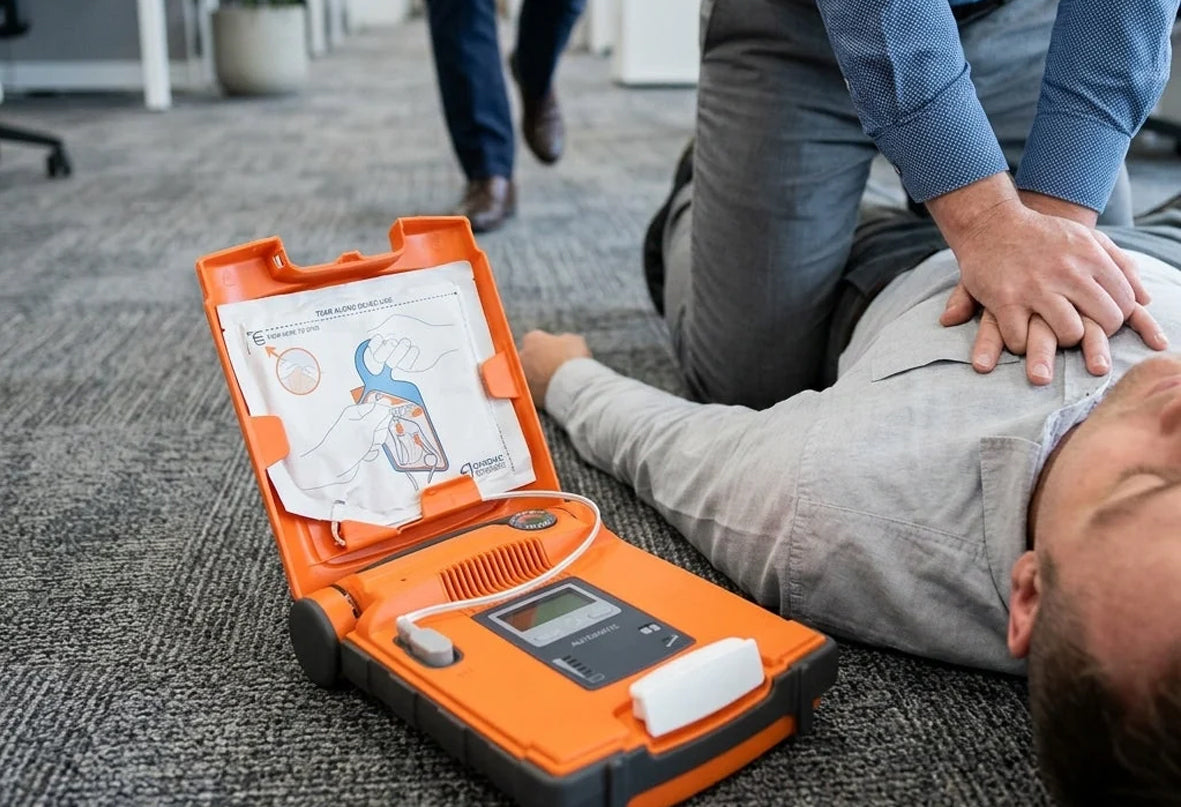
A G5 defibrillator is one of the best things you can have on a wall. It analyses the heart rhythm, decides whether a shock is needed, talks you through every step and even coaches your CPR. But it works best with a person alongside it, doing the parts no device can.
What happens before anyone opens the lid
Picture a colleague collapsing in the lunchroom. Before the defibrillator is involved at all, someone has to:
- Notice and act. Recognise that this is serious, and not freeze.
- Check for danger. Make sure the area is safe for you and for them.
- Check for a response and breathing. A person in cardiac arrest won't respond and won't be breathing normally. Gasping isn't normal breathing.
- Call Triple Zero (000). Or get someone else to call, and put the phone on speaker.
- Send someone for the defib. Knowing exactly where it is saves precious time.
None of that is done by the device. All of it matters.
The gap the defib can't fill: CPR
A defibrillator delivers a shock to reset a chaotic heart rhythm. Before it arrives, and in between shocks, someone needs to be doing CPR to keep blood moving to the brain.
The G5's ICPR feedback is genuinely helpful here. It tells you if you need to push harder or faster. But it can only coach hands that are already on the chest. Knowing where to place your hands, how to position your body, and how to keep going for two minutes without stopping is something you learn by doing.
CPR is also physically tiring. If there are other people around, swapping rescuers regularly keeps compressions effective. That's much easier to organise when someone in the room has done it before.
Managing the moment
Real emergencies are noisy and messy. People crowd in. Someone panics. A phone rings. The person on the floor might have wet clothes or jewellery in the way of the pads.
The G5's voice prompts are clear and calm, but someone still has to take charge: directing people, keeping everyone back when the device says stand clear, and keeping CPR going until paramedics arrive and take over.
When the paramedics arrive
The ambulance crew will want to know what happened and when. A calm handover helps them. The G5 stores rescue data for clinical handover, but the person who was there fills in the rest.
So where does that leave you?
Buying a defibrillator is a big step, and a good one. It means that if something happens, the most important piece of equipment is close by. The other piece is people who know what to do with it.
You don't need a room full of paramedics. One or two people in your workplace with current CPR training can be the difference between hesitating and acting. And the more people who've done it, the less it all rests on one person.
The G5 is built to guide anyone through a rescue. Training means you'll already know what to expect when you use it.


