
First Aid Guides
DRSABCD Action Plan (Infants)
Your first actions in a first aid emergency for an infant (under 1 year)
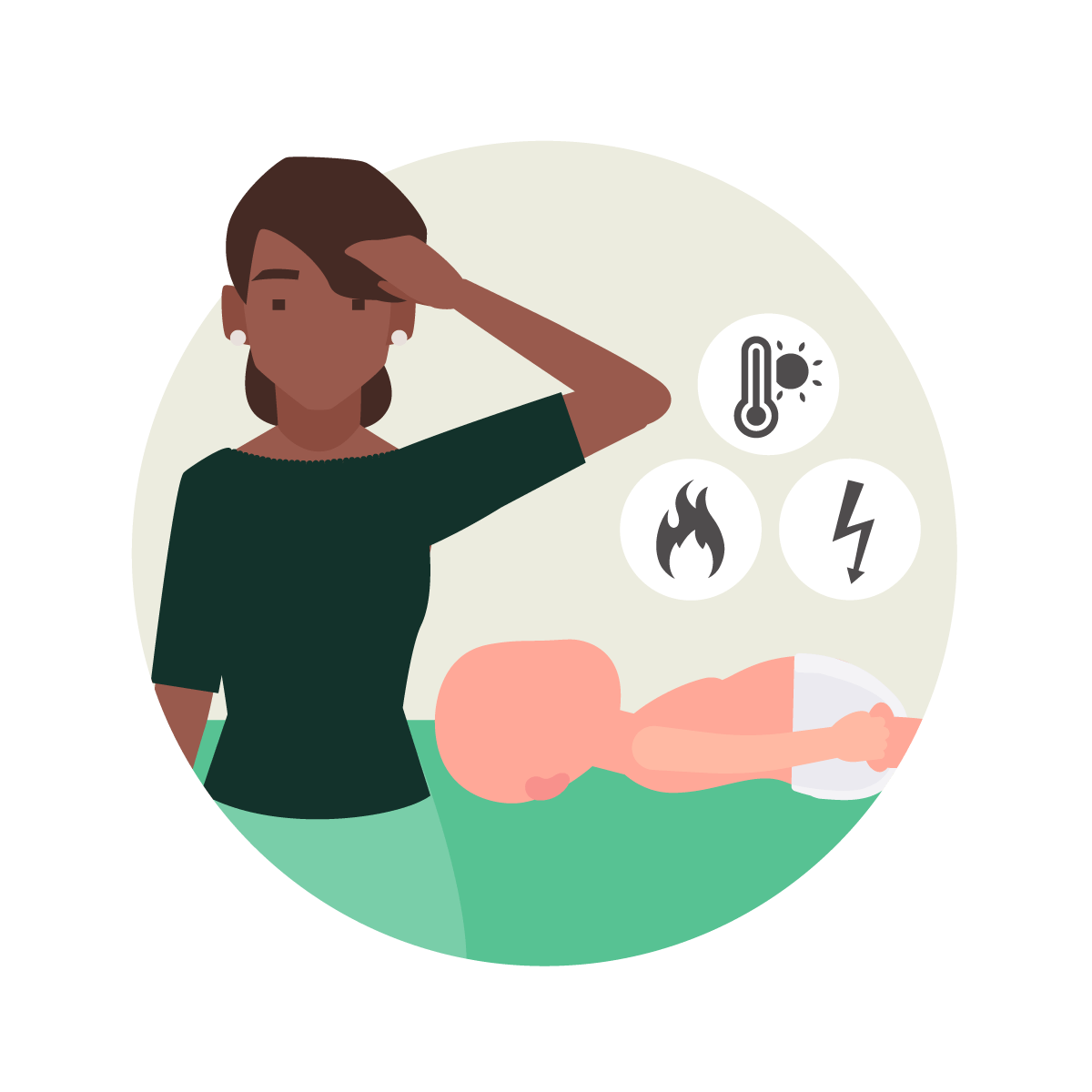
D - Danger
Assess the area to ensure it's safe for yourself, others and the infant in need. Only proceed to help them if its safe.
R - Response
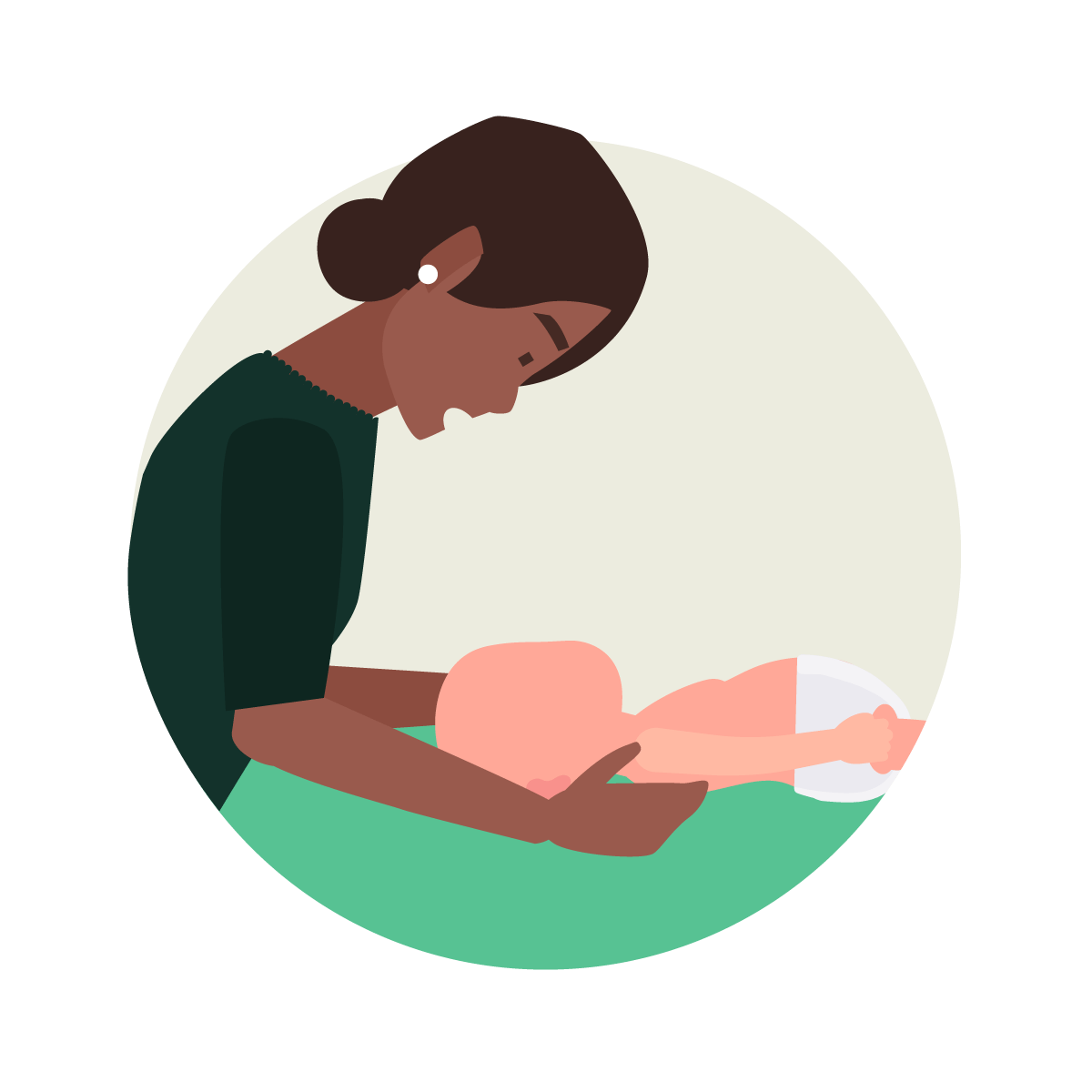
Check for a response. You can do this by talking to them, calling their name and gently squeezing their shoulders.
- If they do respond:
Make them comfortable, check and treat injuries or symptoms, and continue to monitor. If you're unsure it’s an emergency, call Triple Zero (000) and have the situation assessed - If they don't respond:
Send for help immediately and continue to follow the Action Plan
S - Send
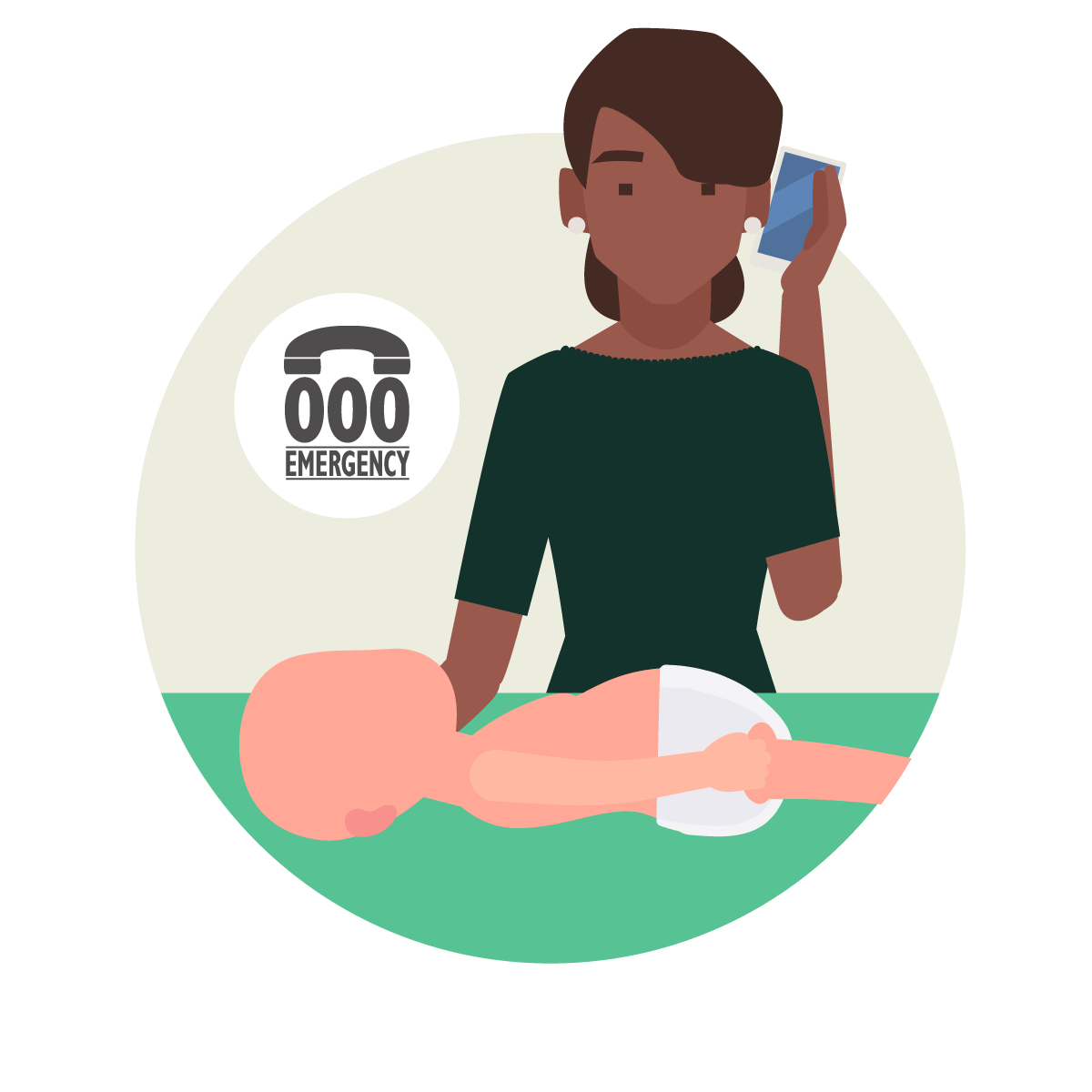
Call Triple Zero (000) for an ambulance or ask another person to make the call.
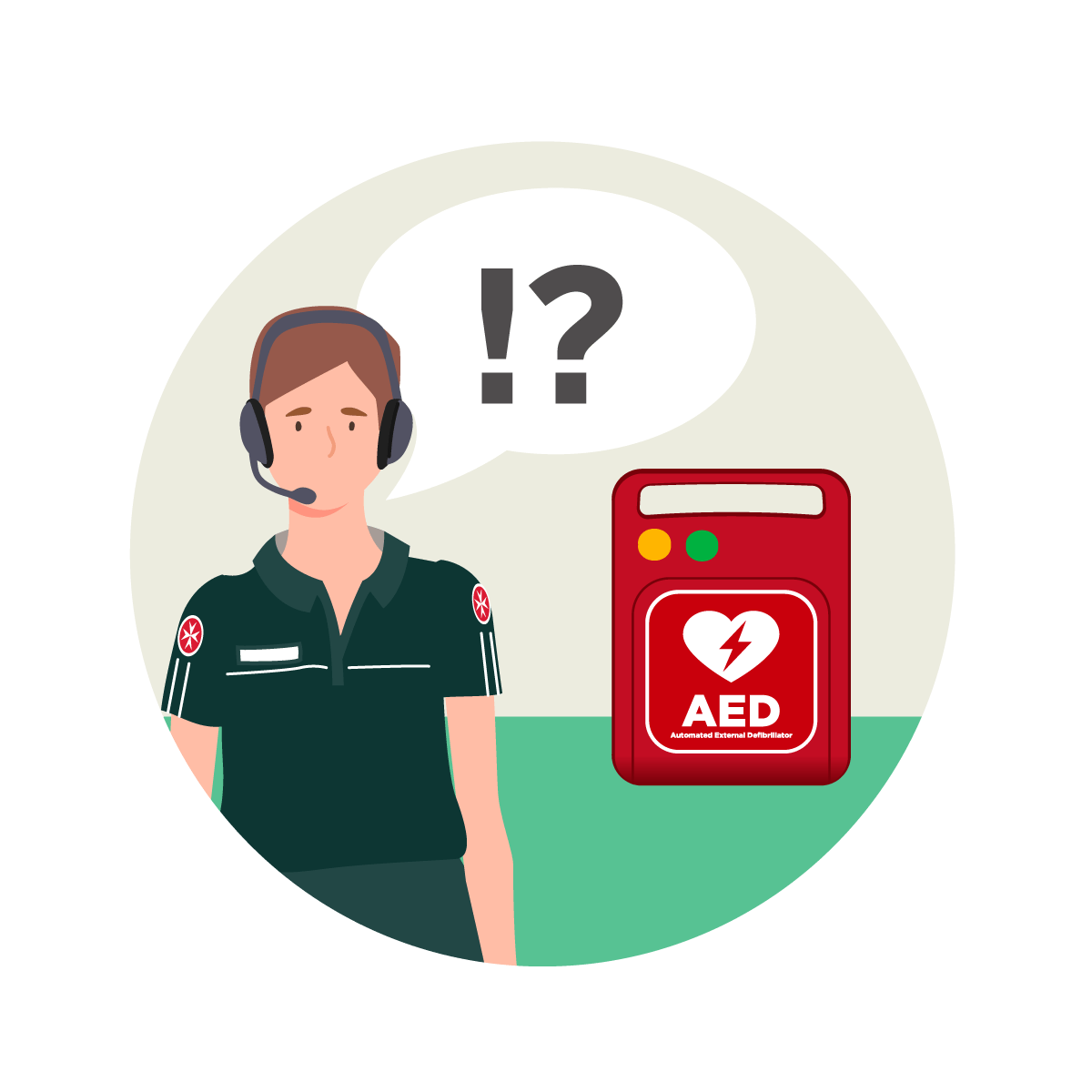
Send for an automated external defibrillator (AED) if available.
A - Airway
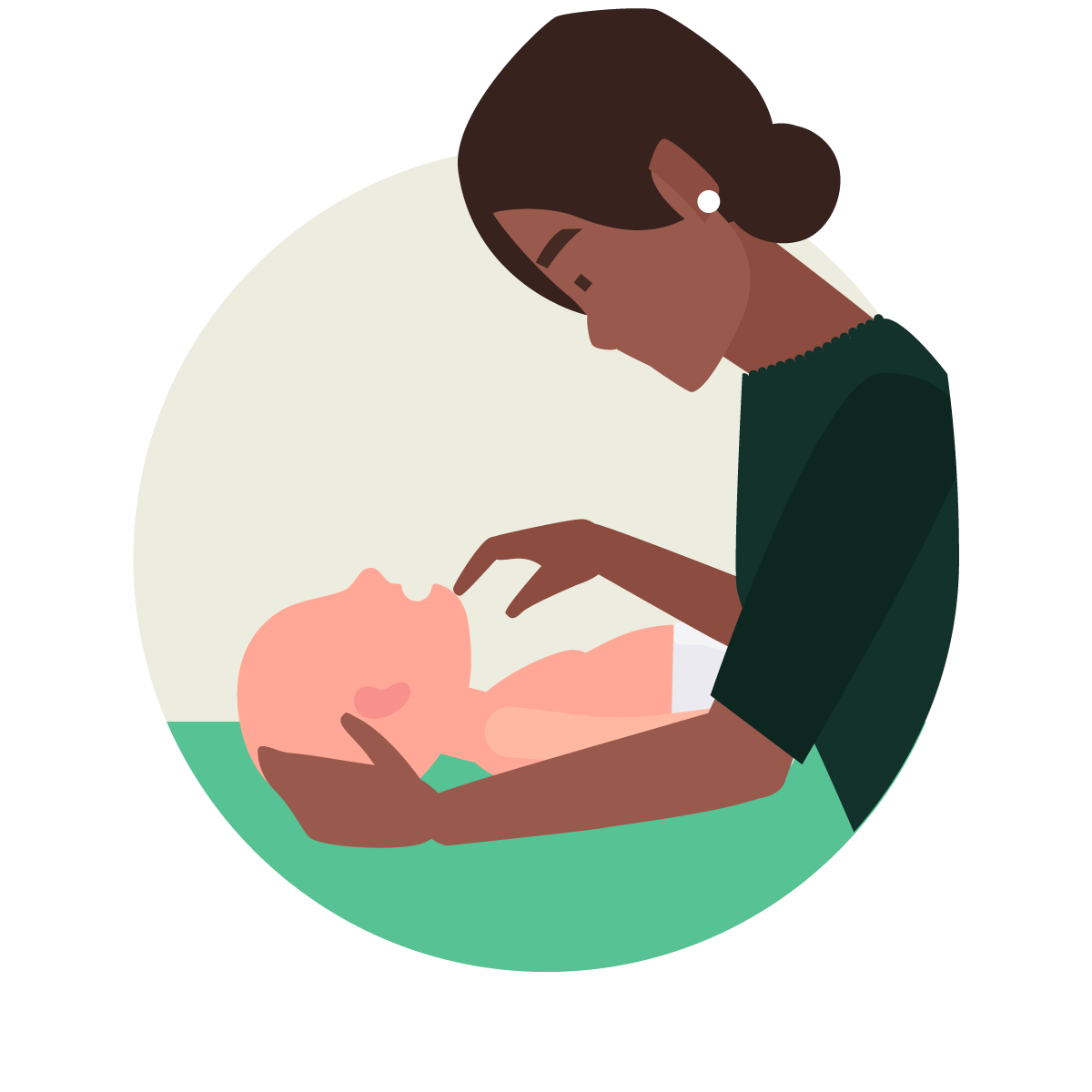
Open their mouth to check if the airway is clear. A blockage could be caused by the back of the tongue or foreign material.
- If the airway is clear:
Leave or place them on their back and open the airway by tilting the head gently (with a chin lift) into a neutral position - If the airway is blocked:
Place them face down on your forearm with the head supported and mouth slightly downward. Clear the airway with your little finger
Once the airway is cleared, open the airway by tilting the head gently into a neutral position.
B - Breathing
Check for breathing. You can do this by looking, listening and feeling.
They are not breathing normally if there are less than 2 breaths in 10 seconds.
- Breathing normally:
Place them face down on your forearm in the recovery position. Monitor breathing and responsiveness until the ambulance arrives - Not breathing normally:
Leave or place them on their back. Gently adjust the head to a neutral position and start Cardiopulmonary Resuscitation (CPR)
C - CPR
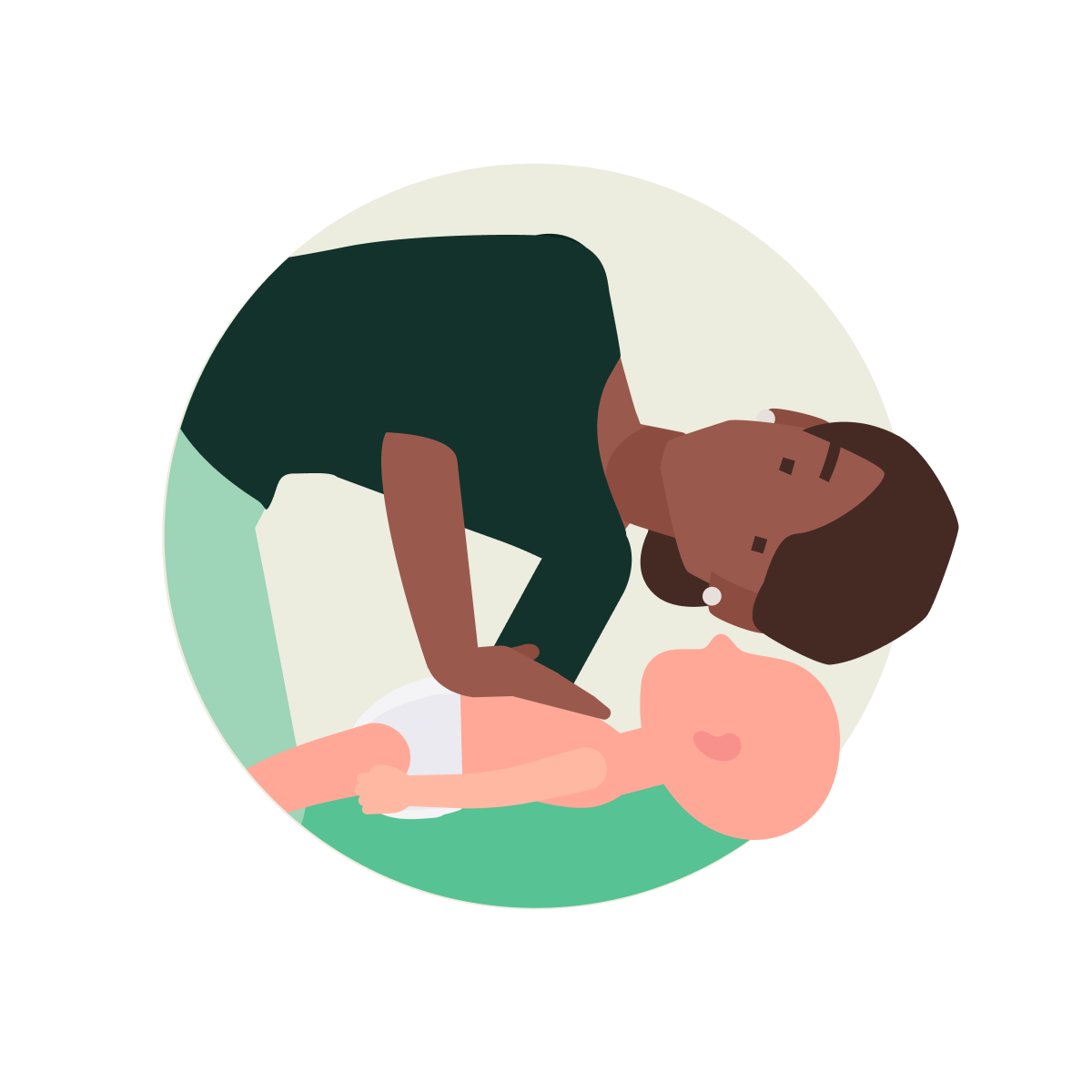
As we are giving CPR to an infant, instead of using the heel of your hand for compressions, we use two fingers (index and middle).
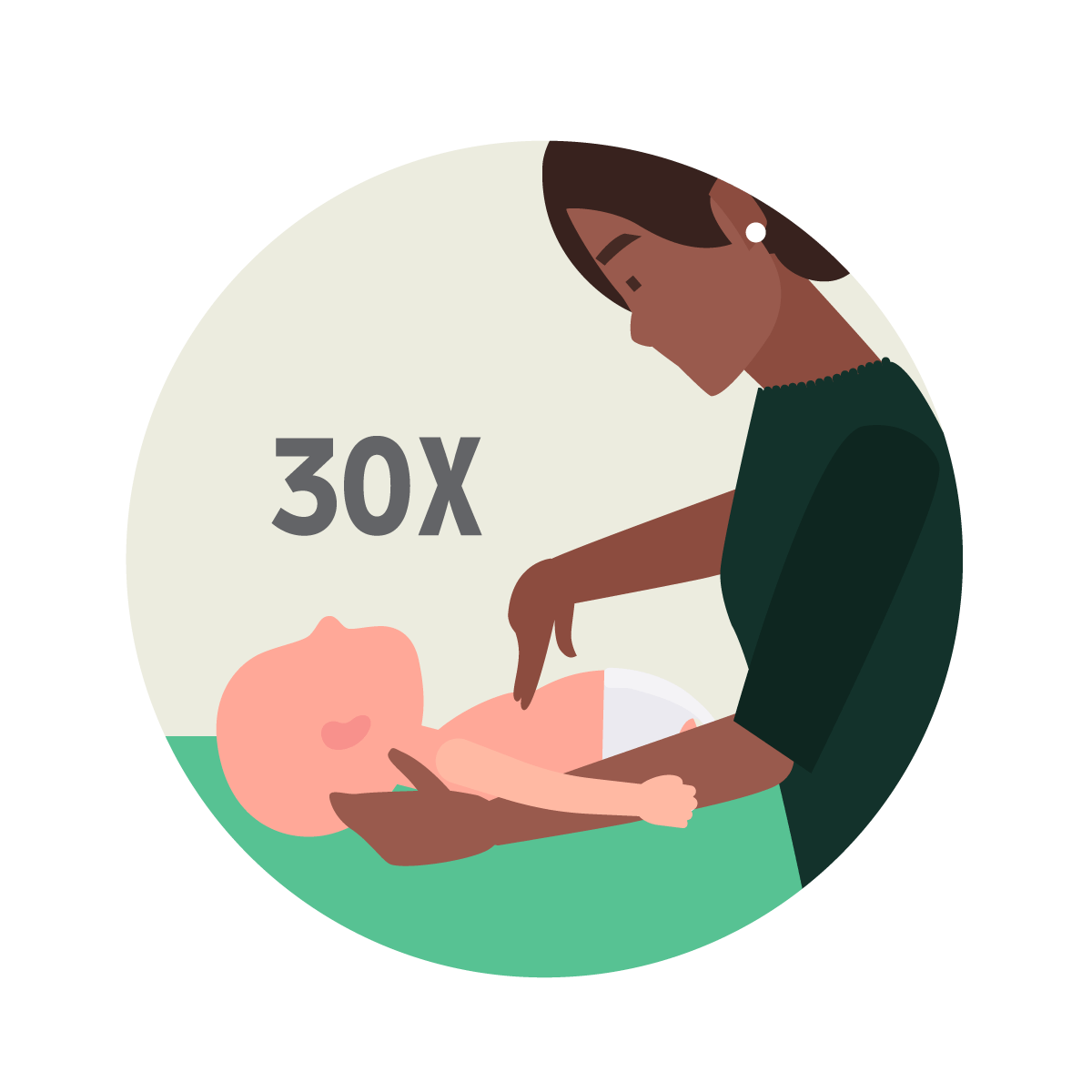
Start CPR by giving 30 chest compressions and 2 breaths (30:2). Aim for approximately 100 to 120 chest compressions per minute.
- Place 2 fingers (index and middle) in the centre of their chest on the lower half of the breastbone
- Give 30 compressions by pressing straight down on their chest by one-third of the chest depth
- Open their airway by tilting the head with a chin lift to a neutral position, then:
- Take a breath and create a seal by covering their nose and mouth with yours
- Deliver one breath with only the air within your cheeks - watch for the chest to rise and fall. Take a breath and blow into the mouth again
- Now repeat these steps with 30 compressions, followed by 2 breaths (30:2)
Continue CPR (30:2) until the ambulance arrives or they recover and respond.
D - Defib
Do not use an automated external defibrillator (AED) on an infant under 1 year.
Only apply a defibrillator if instructed by the Triple Zero (000) operator or a medical professional.